


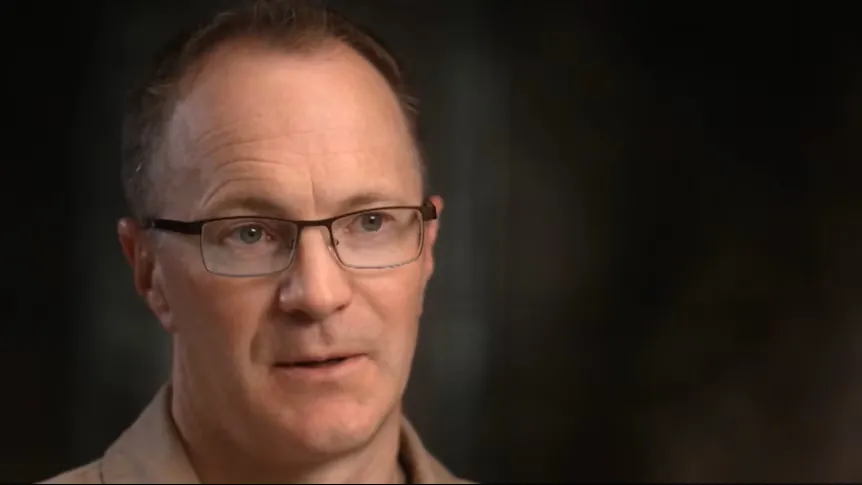
“I’m hurt, I’m moving, God is good.”
Those were among the first words received by the Pentagon from a U.S. weapons systems officer after his F-15E was shot down over Iran, leaving him injured and stranded deep inside territory controlled by an adversary.
The US weapons systems officer, identified publicly only by the codename Dude 44 Bravo, has now described the ordeal in detail, offering a firsthand account of the crash, his injuries and his desperate attempt to avoid capture. The incident occurred in April, when Iranian forces brought down a U.S. F-15E carrying two crew members. Both men ejected from the aircraft and landed roughly eight kilometres apart in difficult terrain.
The pilot, referred to by the codename Alpha, was located and recovered within hours. Bravo, however, remained missing for almost two days. Despite suffering serious injuries, he moved through mountainous terrain in an effort to evade Iranian forces searching for him. He later told the U.S. television programme 60 Minutes that he had to survive without food or water while attempting to stay out of sight.
A terrifying descent
Bravo said the mission initially appeared routine until the F-15E, valued at roughly $30 million, was struck by a shoulder-fired Iranian missile. With the aircraft no longer recoverable, Bravo and Alpha made the decision to eject. As Bravo descended by parachute toward the Iranian landscape, he discovered that his parachute had been damaged.
He described the moment as one of the most frightening experiences of his life, telling journalist Nora O’Donnell that he prayed for help as he descended. He estimated that he struck the ground at between 70 and 100 mph (112–160 km/h).
The impact left him with injuries including a broken back, arm and shoulder. Despite the severity of the crash, he survived. Bravo described his survival as “a modern-day miracle”, saying he believed his faith had helped him through the ordeal.
“I believe it’s a testament to God’s provision in my life to bring me through that moment in a way that didn’t prevent injuries but prevented any catastrophic injuries that would have affected my ability to survive.”
Alone in hostile territory
After reaching the ground, Bravo discovered that Alpha was no longer nearby. The two men had landed several kilometres apart in a remote and rugged area. Bravo found himself injured in a valley surrounded by steep cliffs, with Iranian forces searching for the downed American aircrew.
Iranian authorities had publicly offered a bounty for information leading to the capture of the two servicemen, increasing the danger facing Bravo as he attempted to remain hidden.
Despite his injuries, he began climbing. He eventually made his way toward a ridge approximately 7,000 feet high, seeking higher ground and attempting to put distance between himself and anyone searching for him. The climb was particularly difficult given the injuries sustained during his ejection and impact. Yet remaining where he was carried its own danger: discovery could have resulted in his capture.
Reflecting on the decision to keep moving, Bravo later offered a grimly humorous observation about the stakes involved:
“Never let a lack of motivation put you on Iranian TV.”
His journey would ultimately become a race against time — surviving severe injuries and the harsh Iranian terrain while trying to remain undetected until a rescue operation could reach him.
 Elena Petrova
 Daniel Reyes
 Priya Raman